
Platform updates · 2025-2026
Test the way your users experience your app.
Realistic mobile load, scripts that repair themselves, checks written in plain language: three updates to test better, with less effort.
Testing gets expensive when tests break for no reason
of developers spend at least 30% of their time on manual, repetitive tasks.
Source: Harness, State of Software Delivery 2025- A button moves,the script breaks.
Nothing changed for the user, yet the test has to be fixed.
- The server holds,the app crawls.
A classic load test cannot see what the phone goes through.
- “Is this the right product?”Impossible to code.
Some checks require understanding the screen, not just the code.
Three answers, already in the platform
- Available
Realistic mobile load
Hundreds of Android users simulated on real environments.
Learn more : Realistic mobile load - Beta
Self-healing scripts
AI finds the element again when the interface changes.
Learn more : Self-healing scripts - Beta
Natural-language checks
aiVerify and aiAssert check what the user actually sees.
Learn more : Natural-language checks
Hundreds of Android users, on real environments
Android emulators driven simultaneously in our 2025 trials
Taps, gestures and reading time, just like real users.| What you measure | Request-based load | Smartphone farms | CloudNetCare |
|---|---|---|---|
| Hundreds of users at the same time | Yes | Rarely | Yes |
| Real gestures on the interface | No | Yes | Yes |
| Response time felt on the phone, under load | No | Not under load | Yes |
Capacity depends on the resource usage of the application under test.
The button moved. The test keeps going.
- 1Successful run
The page is kept as the reference.
- 2Element not found
The interface changed, the locator no longer matches.
- 3AI searches
It finds the equivalent element from its description.
- 4Confidence score
A candidate is only kept if it is equivalent.
Three possible outcomes
- Replaced automatically
- Submitted for your approval
- Rejected: real defect reported
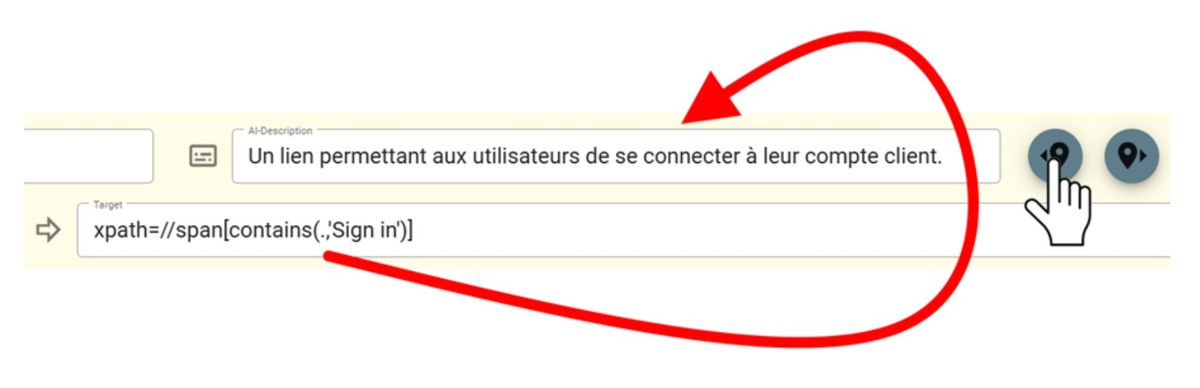
AI describes each element the way a person would
“A link that lets users sign in to their customer account.”
This description, rather than a fragile technical path, is what lets the element be found again after a redesign.
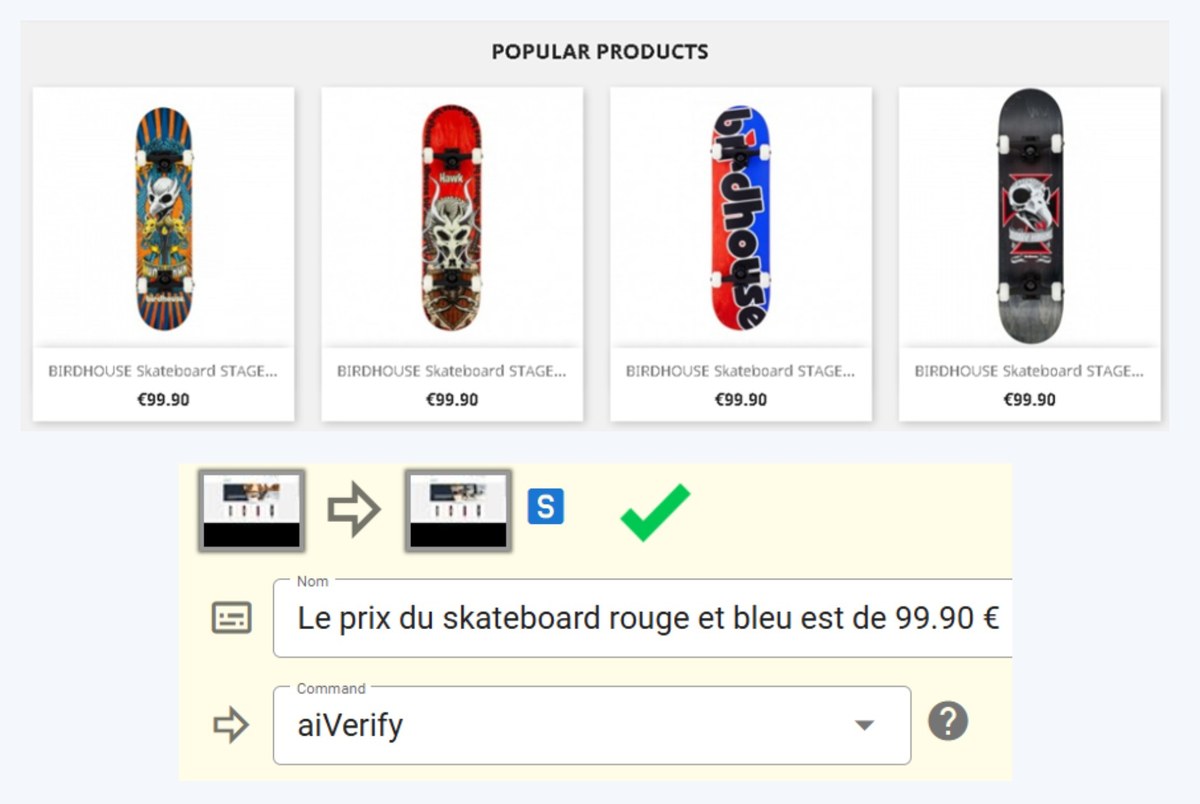
Write your checks the way you would say them
“The price of the red and blue skateboard is €99.90”
AI looks at the screenshot and the page code, then answers true or false. A single command replaces a series of classic checks, on web and mobile alike.
True: check passed
Supervised AI, not a black box
- True, confidence above 90%Passed
- False, confidence above 90%Failed
- Intermediate confidenceInconclusive, to be reviewed
- Inconsistent answerAI technical error
aiAssertBlocking: a negative answer stops the scenario.
aiVerifyNon-blocking: the gap is reported, the scenario continues.
Reliability depends on the question asked: thresholds are tuned as usage grows.
What the platform already delivers for our clients
Up to 9 times faster than manual testing
188 regression tests, nearly 64 hours of manual work, run overnight by our robots.
Around 55 hours given back to your teams with every campaign.
CloudNetCare measurement at a client, 188 tests, 2026.
What’s next: AI before and after your tests
From 2026. These are not yet offered to clients.